Lately, many people have been reaching out to me with the same question.
They keep seeing the ankh symbol everywhere — in images, meditations, dreams, or out on the street — and they feel drawn to it, but they’re not sure why.
Often the next questions are:
What does the ankh really mean?
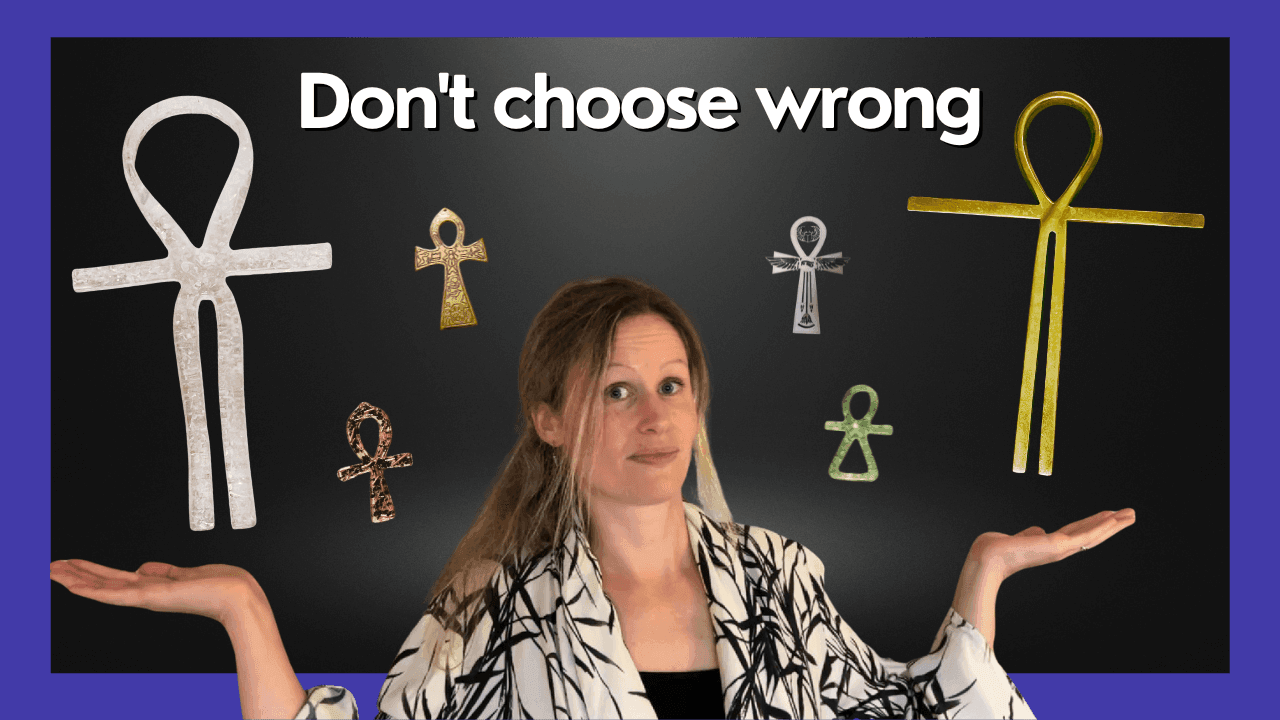
Why are there different types of ankhs?
And how do I know which one is right for me?
In this post, I want to share my personal experience working with the ankh, as a living tool that everyone can use for their own healing.
My Relationship With the Ankh
I’ve been working with the ankh in my own energy healing and self-healing practice for several years now. Over time, it has become a very personal tool for me — one that supports clearing energetic blocks, reconnecting with ancient memory, and aligning more deeply with my own energy.
Some of my experiences with the ankh have also come up during past-life regression work, where the symbol appeared not as something external, but as something deeply familiar.
What I share here is not meant as absolute truth, but as lived experience. I always invite you to feel into what resonates for you.
You can read more about my personal story in my other content.
The Two Main Types of Ankhs
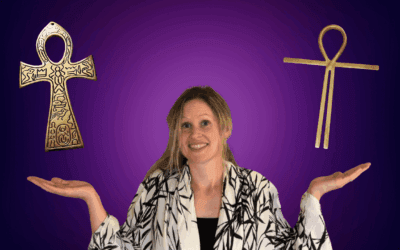
There are many variations of ankhs, but there are two main types that most people encounter.
The Egyptian Ankh (One-Legged Ankh)
This is the ankh most of us recognize — the one often seen in Ancient Egyptian artwork and hieroglyphs. It has a single ‘leg’ and is strongly associated with eternal life, the after life, spiritual power and protection, but it was also being used for energy healing by initiates.
Because so much of Ancient Egyptian history has been preserved, this form of the ankh is the most familiar to us today.
The Atlantean Ankh (Two-Legged Ankh)
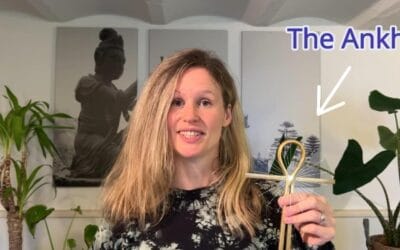
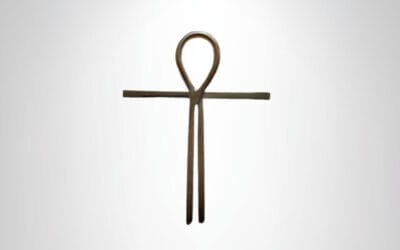
The ankh I personally learned to work with first is the two-legged ankh, often called the Atlantean ankh or Atlantis cross.
This ankh is said to predate Ancient Egypt, and even pre-dynastic and pre-historic Egypt originating from even before Atlantis and later carried into Egyptian civilization, where it eventually evolved into the one-legged form.
Energetically, I experience this ankh as very different. And to many, it feels older, deeper, and strongly connected to ancient memory — not only of Atlantis, but also of Lemuria and other early civilizations.
Using the Ankh for Energy Healing
For me, working with the ankh is about clearing energetic blocks stored in the body and energy field.
We all carry imprints of old experiences, trauma, conditioning, and emotions in our bodies. These don’t just live in the mind — they live in the energetic system and the body. The ankh can act as a tool that helps bring awareness, movement, and release those ‘stuck’ energies.
I always recommend starting with self-healing.
Before using the ankh to support others, it’s important to first build a relationship with your ankh through your own process.
Ankhs and Materials: Why It Matters
Ankhs have been made from many materials throughout history, including gold, copper, brass, and crystal. Each material carries its own frequency.
Metal Ankhs
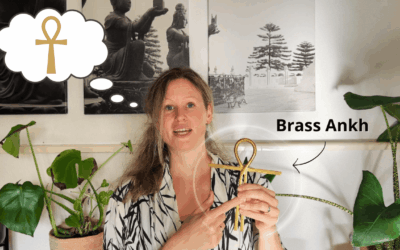
The first ankh I worked with was made of brass. Metal ankhs feel grounding and strong, and they often carry a steady, stabilizing energy. These days, brass is a common metal for an ankh for energy healing, as well as copper. A golden ankh would also be amazing, but they are less affordable.
The beauty of the metal ankh is how it attunes to your energy. You will notice that by working with it, activating it, it will really become and feel like ‘your’ ankh.
Crystalline Ankhs
More recently, I began working with a crystalline ankh that was created specifically for me and attuned to my energy. It’s so beautiful!!
This ankh contains:
- Clear quartz
- Angel aura quartz
- Herkimer diamond
- Prince quartz
- Mary Magdalene quartz
- …and more crystals!
The energy of a crystalline ankh is very different from metal. It feels more fluid, more expansive, and more responsive to subtle intention. Depending on the moment, I feel drawn to work with one or the other. Sometimes I feel the moment calls for a metal ankh, and sometimes for a crystalline ankh.
Wooden Ankhs
Wooden ankhs may not always feel as strong for energy healing, but they can carry beautiful energy, support and even symbolism. If you feel drawn to wood, you might even consider creating one from a specific type of tree — such as oak for grounding or pine for its balsaming and healing qualities.
Ankhs, Deities & Archetypal Energies
The ankh can also be used as a bridge for working with archetypal or deity energies. If you’re working with a specific quality — protection, grounding, feminine or masculine balance — the ankh can help you connect with that frequency more clearly.
Personally, I feel the Atlantean ankh connects me more strongly with Atlantis and Lemuria, while the brass ankh supports connection with Ancient Egyptian energies.
The Ankh, Tanit & Divine Union
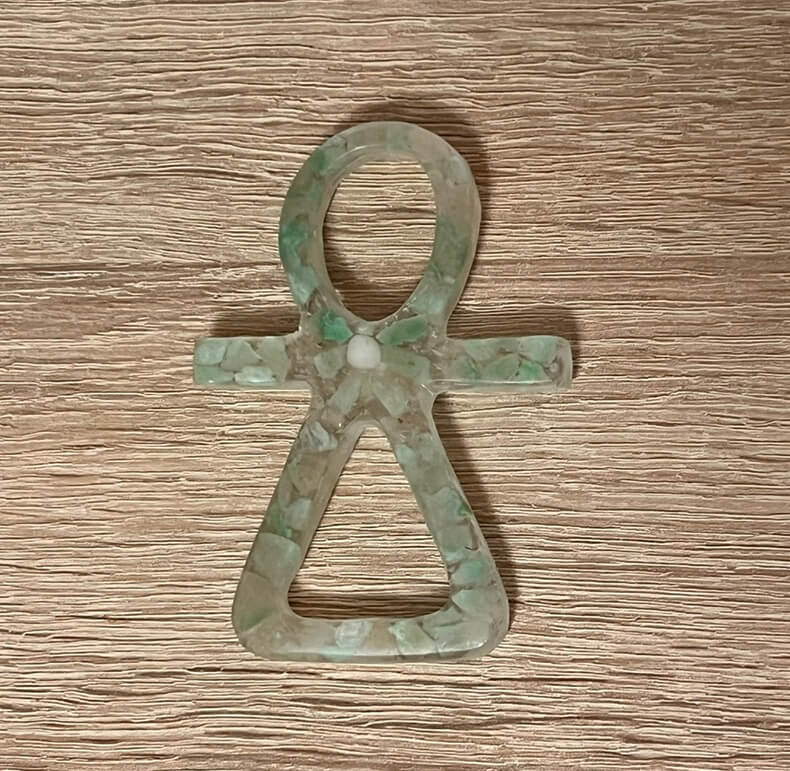
Recently, another symbol crossed my path — Tanit, (see the image below) an ancient goddess form, also associated with Aphrodite. I experience Tanit as the feminine embodiment of the ankh.
The ankh itself represents the union of masculine and feminine, while Tanit feels like the feminine expression of that same principle. The Christian cross, in contrast, carries a more masculine energetic shape.
This is a subject I’ll share more about in a future post, as my story of how I found Tanit is deeply personal!
Choosing the Right Ankh for You
If you feel drawn to the ankh and want to choose the right ankh for you:
always listen to your body and your energy.
There is no “better” ankh — only the one that resonates with you in this moment. Sometimes that resonance changes over time, and that’s okay.
If you’d like support getting started, I’ve created a free Ankh Introduction Guide and an online Ankh Introduction Course, which you can find more information about on my website.
And if you already work with an ankh, I’d love to hear about your experiences. After all, sharing our stories is an essential part of how we remember the power of the Ankh!
With love,
Linda ✨



0 Comments